
Last updated September 25, 2026
Non-destructive entry first, always - and we re-key Schlage, Kwikset, and Baldwin locks on the spot while you watch
You get a price before we start. It does not change when we arrive. No surprises.
Commercial Locksmith Maintenance Checklist for Long Beach Homeowners
A worn commercial door closer that lets a fire door prop open is not a maintenance inconvenience - it is a California Fire Code violation that can void your occupancy permit. Most commercial lock inspections never check door closer force or latch projection depth. In Long Beach, where coastal humidity accelerates corrosion in exit devices and salt air degrades door closer seals within 18 months of installation, a facility-grade maintenance program looks nothing like a residential checklist with bigger numbers. This guide - alongside The Complete Guide to Locksmith in Long Beach - gives Long Beach business operators a hardware-specific, code-grounded inspection framework tied to actual cycle-count wear, ADA compliance tolerances, and vendor contract structures that protect your liability exposure.
Quick Answer
Commercial lock maintenance in Long Beach should follow a quarterly inspection cycle for high-traffic entrances, a semi-annual cycle for secondary doors, and an annual master key system audit. Each inspection must cover cycle-count wear estimation, ADA lever height and strike alignment, exit device function under coastal humidity conditions, and documented photo records of all findings. A properly structured vendor agreement specifies these frequencies in writing, with flat per-lock pricing and no dispatch-time surcharges.
Table of Contents
- Why Commercial Lock Maintenance Is a Different Discipline
- Cycle-Count Thresholds: Knowing Where Your Hardware Stands
- ADA Compliance Checkpoints: The Tolerance Trap
- Exit Device Inspection for Long Beach’s Coastal Environment
- Master Key System Audit: Documentation and Control
- Structuring a Vendor Maintenance Agreement
- Common Mistakes to Avoid
- When to Call a Professional
- Frequently Asked Questions
Why Commercial Lock Maintenance Is a Different Discipline
Residential lock maintenance means lubricating a deadbolt and checking strike alignment. DIY vs Professional Locksmith: The Long Beach Homeowner’s Decision Guide covers why home approaches fail for commercial maintenance, which is governed by fire code, ADA Title III, California Building Code Chapter 10B, and your insurance carrier’s loss-control requirements. The hardware is different, the failure modes are different, and the liability when something fails is catastrophic.
Consider the cylindrical lock on a retail storefront in Bixby Knolls. A Grade 2 residential deadbolt might see 10 cycles per day. The same format in commercial Grade 1 hardware sees 400-800 cycles daily. The internal components are built for this load - brass or stainless-steel cams, hardened steel pins, heavy-gauge springs - but they still wear on a predictable curve. The difference is that commercial hardware failure rarely announces itself with a sticky key. It announces itself with a latch that doesn’t fully extend, a door that drifts open in a Santa Ana wind, or an exit device that binds at 2 a.m. when the alarm company calls about a forced-entry signal that was actually a mechanical failure.
We’ve documented this pattern across Long Beach commercial properties since 2002. The properties that treat commercial maintenance as “residential plus” miss the inspection points that matter: door closer closing speed and latch velocity, exit device touchpad travel distance, electric strike alignment after frame settling, and the gap between lever return springs and their factory torque specification. These are not aesthetic concerns. In 2019, a Downtown Long Beach restaurant learned this when a fire marshal inspection cited a propped fire door with a failed door closer; the occupancy permit was suspended for 72 hours. The closer had been “working fine” by casual observation for months.
The discipline requires different tools, too. A residential technician carries a pinning kit and a rekey tool. A commercial inspection requires a door closer pressure gauge, a latch projection depth gauge, an ADA lever-height measuring tool, and a cycle-count estimation method based on traffic patterns and installation date. At Novak Lock & Security Long Beach, our commercial inspections include all of these measurements, with findings documented in a written report and photo record left with the facility manager on completion - Haven Standard Clause 4, documented evidence on every visit.
Cycle-Count Thresholds: Knowing Where Your Hardware Stands
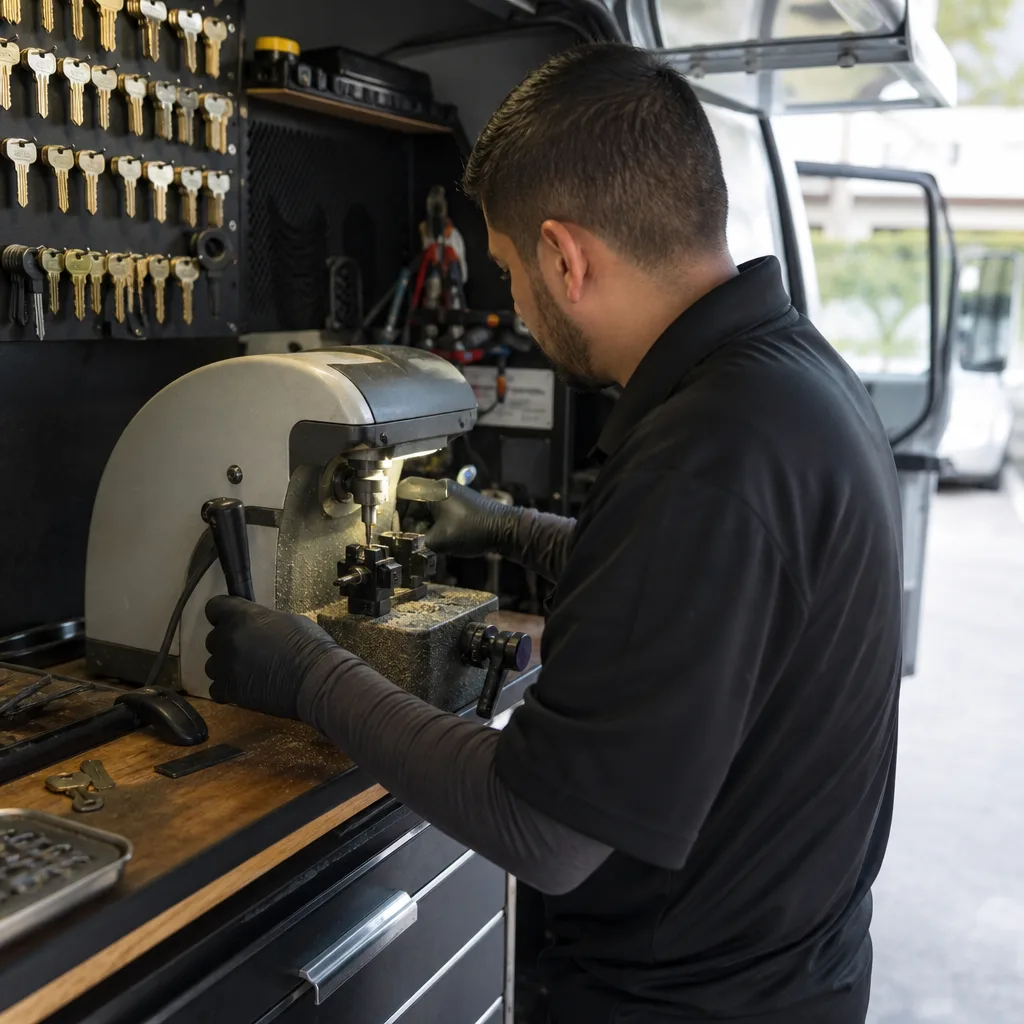
Commercial lock hardware is rated by cycle count: the number of complete open-close operations before factory-specified wear limits. Understanding where your hardware sits on this curve lets you predict failure before it happens, rather than reacting after a security or code violation occurs.
Grade 1 Cylindrical Locks: 800,000 Cycles
Grade 1 cylindrical locks from Schlage, Yale, and equivalent manufacturers carry an 800,000-cycle rating under ANSI/BHMA A156.2. At 500 cycles per day - a moderate-traffic retail entrance - that’s roughly 4.4 years to rated end-of-life. But “rated end-of-life” does not mean failure. It means the lock still functions but may no longer meet the manufacturer’s specification for operating force, latch projection, or key withdrawal torque. In practice, we see functional degradation beginning around 60% of rated cycles: key operation becomes rough, the latch begins to retract with reduced spring force, and the internal cam develops enough wear slop that master key systems start to show intermittent operation on certain change keys.
To estimate your position on the cycle curve:
- Establish installation date from your original invoice or permit record. If unknown, inspect the lock for date codes - most manufacturers stamp the year and quarter on the chassis edge.
- Calculate daily cycles with a manual count during peak hours, then extrapolate. A door with 50 cycles in a 2-hour observation window likely sees 400-500 daily in full operation.
- Multiply and compare: daily cycles × days since installation = estimated total. At 500/day × 3 years = ~547,500 cycles. You’re in the inspection-critical zone.
In Long Beach’s coastal environment, we reduce these estimates by 15% for exterior hardware. Salt air accelerates spring fatigue and corrodes internal pin chambers even when the exterior finish appears intact. We’ve replaced Schlage ND-series cylinders at 450,000 cycles that showed pitting inside the pin chambers - invisible without disassembly, but causing intermittent master key failure.
Mortise Locks: 1,000,000 Cycles
Grade 1 mortise locks - the standard for high-traffic commercial entrances - carry a 1,000,000-cycle rating. The heavier chassis and larger internal components extend life, but mortise locks also have more failure points: the deadlatch plunger, the auxiliary bolt, the hub spring, and the faceplate screws that secure the lock body to the door edge. In the Alamitos Beach commercial corridor, we’ve found that mortise locks on ocean-facing properties require faceplate screw replacement at 18-month intervals due to galvanic corrosion between stainless hardware and aluminum door edges.
Exit Devices (Panic Bars): 500,000 Cycles
Exit devices are rated at 500,000 cycles under ANSI/BHMA A156.3, but this rating assumes indoor, climate-controlled environments. In Long Beach, exterior exit devices on restaurants, marinas, and waterfront properties see accelerated wear from humidity infiltration into the touchpad mechanism and corrosion of the bottom rod guides on vertical-rod models. We inspect these quarterly for properties within two miles of the coastline.
When to Replace vs. Rebuild
At 80% of rated cycles, rebuild becomes uneconomical. A mortise lock rebuild runs $180-$340 in labor plus parts; replacement with new hardware, including rekey to existing master keying, runs $280-$520. The rebuild saves money only if the chassis and trim are in excellent condition. We document this assessment with photos of internal wear, provided to the customer before any work proceeds - Haven Standard Clause 1, written price before any work starts.
ADA Compliance Checkpoints: The Tolerance Trap
A door that passed ADA inspection five years ago may now be out of compliance. Not because the law changed, but because hardware swaps, door replacements, and frame repairs altered the critical tolerances without anyone checking.
The Measurements That Matter
ADA Title III and California Building Code Section 11B-404 specify:
- Lever handle height: 34 inches maximum above finished floor to the centerline of the grip. A new floor covering - luxury vinyl plank, raised tile, even thick carpet pad - can push a 33-inch lever to 35 inches.
- Operating force: maximum 5.0 pounds for interior doors, 8.5 pounds for exterior. A failing door closer or corroded hinge can push this to 12-15 pounds without the change being obvious to regular users.
- Strike alignment: the latch must engage with the strike plate without binding or excessive pressure. Misalignment increases operating force and accelerates wear.
- Clear opening width: 32 inches minimum for a single door. Hinge-bound doors or sagging frames reduce this dimension.
We see the tolerance trap most often in Long Beach’s older commercial buildings, particularly in the Retro Row corridor and Downtown core where 1920s-1950s structures have been adapted for modern retail and office use. A property owner replaces a worn cylindrical lock with a new lever set, installs it at the same backset, and assumes compliance. But the original installation may have been non-compliant, or the door may have been rehung with different hinge placement, shifting the lever height. Without measurement, the new hardware inherits the old violation.
The Inspection Protocol
- Measure lever height with a laser level from finished floor to grip centerline. Record to nearest 1/8 inch.
- Test operating force with a calibrated push-pull gauge at the lever’s end, measuring peak force to unlatch and fully open.
- Inspect strike alignment with the door held at 1/2 inch from closed position; the latch nose should align with strike center without contact.
- Check clear opening width with door open 90 degrees, measuring the narrowest point of the active leaf.
- Document all measurements with photos, dated, and compare to previous inspection records for trend analysis.
At Novak Lock & Security Long Beach, ADA compliance inspection is included in our commercial maintenance agreements at no additional charge. Findings are delivered in writing with photo documentation. If remediation is required, the scope and flat price are quoted before any work begins - no dispatch-time surcharges, no invoice surprises. Access control systems in Long Beach that integrate with electrified hardware require additional ADA review for automatic operator timing and sensor placement, which we cover in our access-control scope documents.
Exit Device Inspection for Long Beach’s Coastal Environment
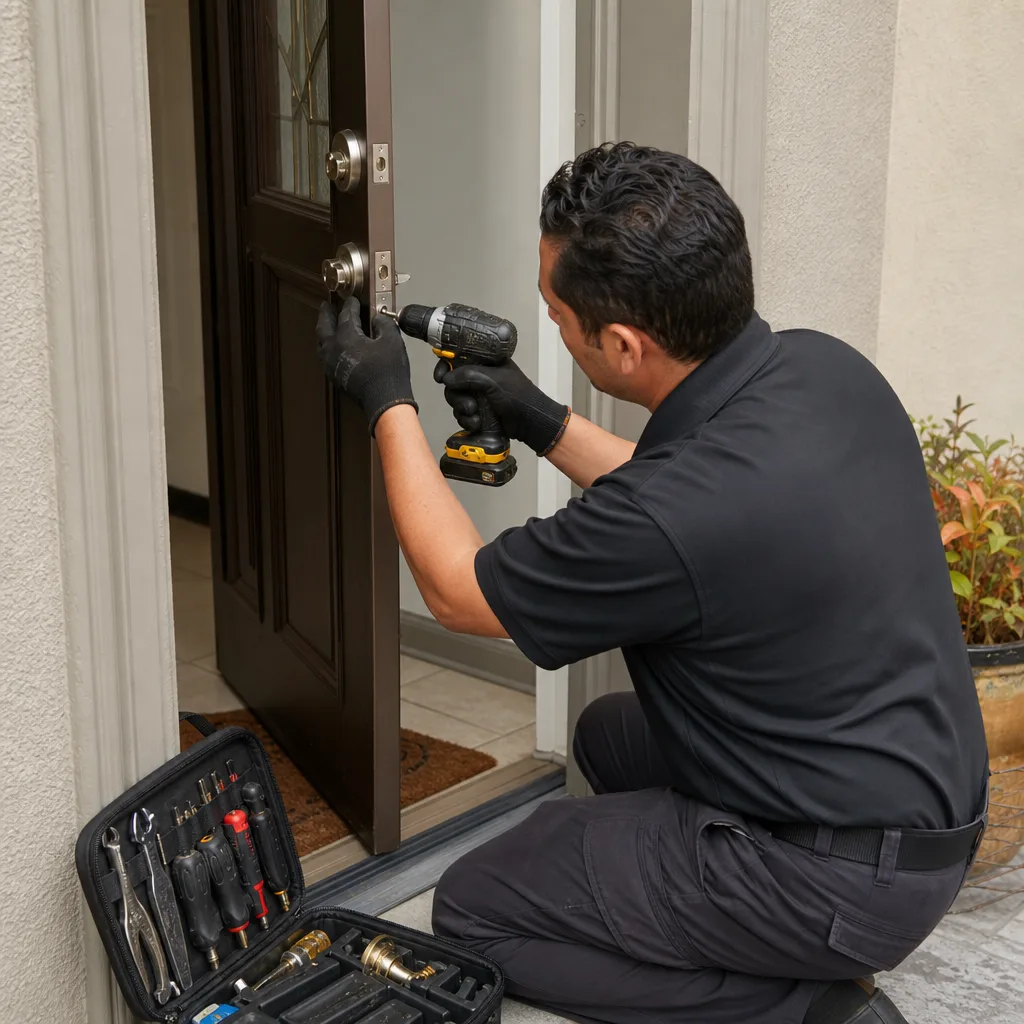
Exit devices, or panic bars, are the most critical life-safety hardware in any commercial occupancy. They’re also the most vulnerable to Long Beach’s specific environmental conditions. The combination of marine-layer humidity, salt aerosol, and temperature cycling creates failure modes that inland inspectors rarely encounter.
Humidity-Specific Failure Modes
Coastal humidity penetrates exit device mechanisms through the touchpad mounting slots and end cap seams. Once inside, it condenses on internal levers and cams during temperature drops - common in Long Beach’s early morning marine layer events. The result is corrosion pitting that changes the mechanical advantage of the internal linkage. A touchpad that required 15 pounds of pressure when installed now requires 35 pounds. In an emergency, this increased force delays egress. In extreme cases, the device binds completely.
We’ve documented this specifically in the Shoreline Village marina district and along Ocean Boulevard properties, where exterior exit devices show internal corrosion at 2-3 years versus 7-10 years in inland Long Beach neighborhoods like Los Altos or El Dorado Park. The exterior finish can appear pristine while internal components are compromised.
The Long Beach Exit Device Inspection Checklist
- Touchpad travel and return: Depress fully and release. The touchpad must return to neutral without sticking or delayed rebound. Delayed return indicates internal corrosion or weak return springs.
- Latch retraction force: With door open, depress touchpad and measure latch retraction with a scale. Must retract fully with ≤15 pounds pressure at touchpad center.
- Dogging mechanism: If equipped with hex-key or cylinder dogging, test for secure hold and clean release. Corroded dogging screws are a common failure point.
- Vertical rod alignment: For surface or concealed vertical rod devices, inspect top and bottom rod guides for corrosion, debris, and proper engagement. Bottom rods in coastal properties often show galvanic corrosion where aluminum rod meets steel guide.
- Rim cylinder function: Test key operation from outside. Key must retract latch smoothly without excessive torque. Binding indicates cylinder wear or internal corrosion.
- Door closer coordination: Exit device must release latch before door closer resistance exceeds egress force requirements. Test by timing latch release against door opening pressure.
We recommend quarterly inspection for exit devices within 1.5 miles of the Long Beach coastline, semi-annual for properties between 1.5 and 3 miles inland, and annual for locations east of the 405 freeway where marine influence diminishes. These frequencies are written into our maintenance agreements with flat per-device pricing - not estimated after inspection.
For properties with electrified exit devices tied to access control, we also verify power transfer hinge condition, electric latch retraction timing, and fire alarm interface function. These integrations add failure points that pure mechanical inspection misses.
Master Key System Audit: Documentation and Control
Master key system maintenance is not hardware maintenance. It is key control maintenance, and it is where most commercial properties accumulate invisible liability. An unauthorized key copy made at a hardware store, a change key issued to a terminated employee and never recovered, a master key lent to a contractor and duplicated - each represents a security gap that no amount of hardware inspection will reveal.
The Audit Framework
We conduct master key audits on a schedule separate from hardware inspection: annually for most properties, semi-annually for high-turnover operations like retail and hospitality. The audit has three components.
Key issuance documentation review. We request the property’s key control log and compare it against our own installation records. Discrepancies - keys issued without log entry, log entries without corresponding key blanks, duplicate serial numbers - indicate breakdowns in control procedure. In a 2023 audit for a Downtown Long Beach office building, we found 11 keys in circulation that had never been logged, including two master-level keys issued by a previous property manager who left no records.
Physical key inventory. We inspect all keys held by management, maintenance staff, and contracted services. Worn keys are replaced before they fail in a lock. Keys with unauthorized stamping - “DO NOT DUPLICATE” ignored by a hardware store key machine - are flagged for rekey consideration. We also check for bump keys and pick tools in maintenance areas, a vulnerability most audits miss.
Security tier assessment. We map the current master key hierarchy against actual access needs. Properties often accumulate master key levels that no longer match organizational structure: a former facilities director’s grand master, a contractor’s temporary master that became permanent, a tenant’s sub-master that outlived their lease. Each unnecessary tier increases exposure. We recommend flattening the hierarchy when possible, reducing the number of keys that open multiple suites or floors.
Rekey vs. Continued Control Failure
There is a crossover point where continued key control failure costs more than a full system rekey. We calculate this with customers using a simple framework: estimated cost of unauthorized access incident (theft, liability, lock replacement after break-in, insurance deductible) multiplied by probability based on keys unaccounted for. When the annual risk exposure exceeds 1.5× the rekey cost, we recommend rekeying.
A full commercial master key rekey in Long Beach typically runs $45-$85 per cylinder for standard pin-tumbler hardware, $120-$220 per cylinder for high-security Medeco or Mul-T-Lock systems. The price includes new keys, key control registration, and updated bitting records. We quote this in writing before any work begins, with no call-out surcharge added on arrival - Haven Standard Clause 1.
After rekey, we provide a key control register with serialized key tags, a sign-out log template, and a policy recommendation that restricts duplication to factory-authorized centers only. For Medeco and Mul-T-Lock systems, duplication is mechanically restricted to authorized dealers; for standard Schlage or Kwikset systems, policy restriction is the only control.
Structuring a Vendor Maintenance Agreement
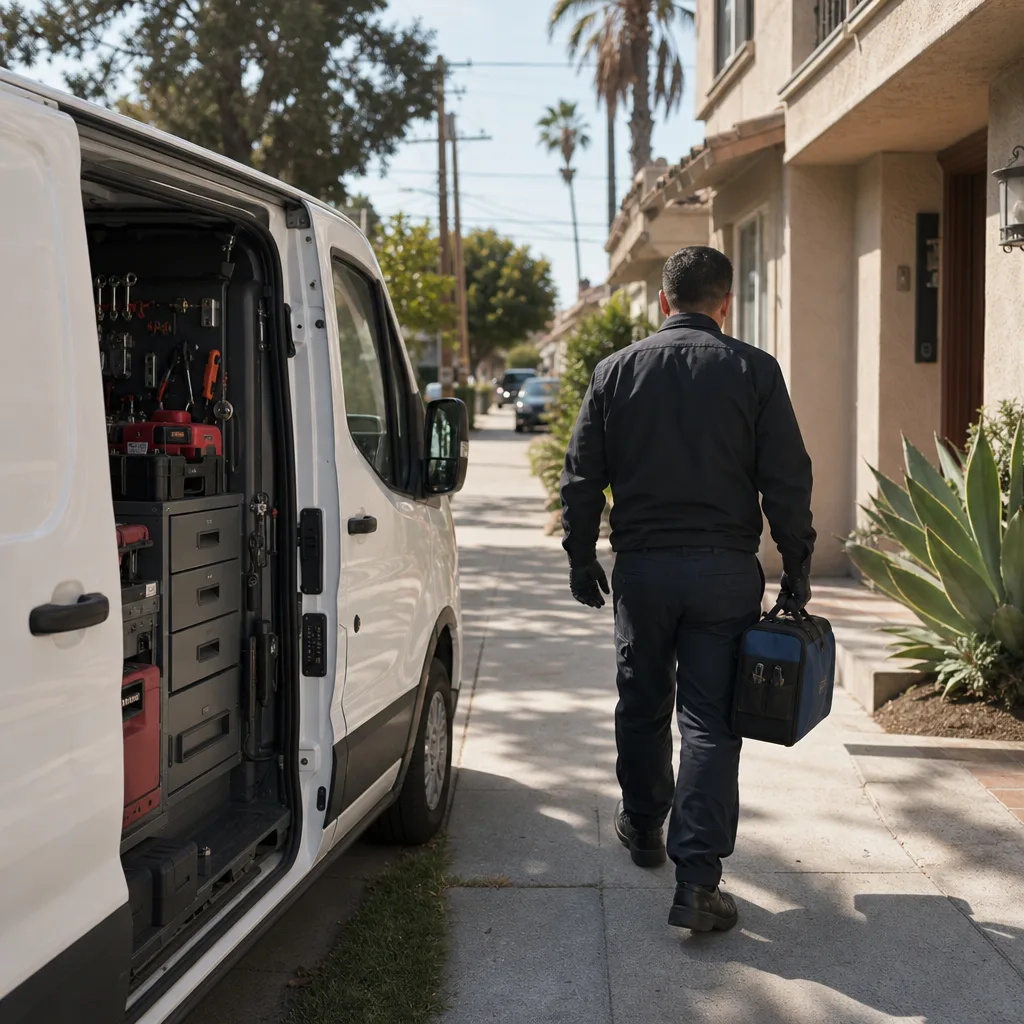
The weakest point in most commercial lock maintenance programs is not the hardware or the inspection checklist. It is the vendor agreement, or the absence of one. Too many Long Beach properties rely on informal arrangements: call when something breaks, accept whatever the technician recommends, pay the invoice. This approach guarantees reactive maintenance, unpredictable costs, and no documentation trail for insurance or code compliance.
What a Proper Agreement Specifies
A facility-grade maintenance agreement with Novak Lock & Security Long Beach includes these elements in writing:
- Scope by door classification: Entry doors, fire-rated doors, storage rooms, and access-controlled entrances each have distinct inspection requirements. The agreement specifies which hardware types are covered and which are excluded.
- Frequency by traffic and environment: High-traffic entries quarterly, standard commercial semi-annually, master key audit annually. Coastal properties within marine influence zone receive modified frequency with explicit geographic definition.
- Documentation standard: Photo record of every inspection point, written condition report with measurements, comparison to previous inspection data, and trend alerts for degrading hardware. Haven Standard Clause 4 requires this on every visit.
- Pricing structure: Flat per-lock inspection fee, flat per-cylinder rekey price, hardware replacement quoted in writing before installation. No hourly rates that incentivize slow work, no parts markup without disclosure.
- Response commitment: For emergency calls outside scheduled maintenance, guaranteed live answer (not voicemail queue) and documented dispatch time. Our agreement specifies calls answered by a live person, 24/7 - not a callback window.
- Technician standard: Background-checked, uniformed, with photo ID and documented visit record. Not a promise, a procedure.
Red Flags in Vendor Proposals
We review competitor agreements for Long Beach property managers who bring them to us under our Free Second Opinion on Any Written Estimate program. Common deficiencies include: “inspect all locks” without defining “inspect,” “as needed” replacement language with no price ceiling, hourly labor rates with no estimate binding, and exclusion of ADA compliance measurement from scope. One proposal we reviewed in 2024 specified “lubrication as required” but excluded disassembly - meaning corrosion inside the lock body would never be detected.
Our agreements are governed by The Haven Standard, the quality and documentation framework shared across all ten Haven brands. Each clause is numbered and referenced in every customer communication. The price on the phone is the price on the invoice - Clause 1 - and this applies to maintenance agreement work as well as emergency calls.
For properties with residential components - mixed-use buildings, live-work units, commercial condos - we can structure combined agreements that apply appropriate standards to each occupancy type without conflating them.
Common Mistakes to Avoid
- Treating commercial hardware like residential. Using WD-40 on a Grade 1 mortise lock attracts dust and accelerates wear; proper lubricant is dry graphite or Teflon-based spray specified for commercial pin tumbler systems.
- Ignoring door closer inspection. A door closer with leaking hydraulic fluid or incorrect closing speed lets fire doors drift open, creating code violations. Most property managers never check closer function until a fire marshal cites them.
- Assuming ADA compliance persists after hardware changes. Every lock replacement, door replacement, or flooring change can alter lever height, operating force, or clear opening width. Re-measure after any modification.
- Neglecting master key audit until after a security incident. Annual audits cost $200-$400 for most Long Beach commercial properties; a single unauthorized key incident costs multiples of that in rekeying, inventory checks, and insurance claims.
- Using unqualified vendors for exit device work. Exit device installation and repair requires specific training; incorrect installation can create life-safety hazards and void fire rating. We see improper dogging mechanisms and misaligned vertical rods from handyman installations regularly in Belmont Shore and Naples.
- Accepting verbal estimates for commercial work. Without written scope and price, there is no documentation for insurance, no basis for dispute resolution, and no protection against bait-and-switch pricing at the door.
- Overlooking coastal environment factors. In Long Beach, exterior hardware within two miles of the coastline requires more frequent inspection and corrosion-resistant specifications. Standard interior-grade hardware fails prematurely when installed on ocean-facing doors.
When to Call a Professional
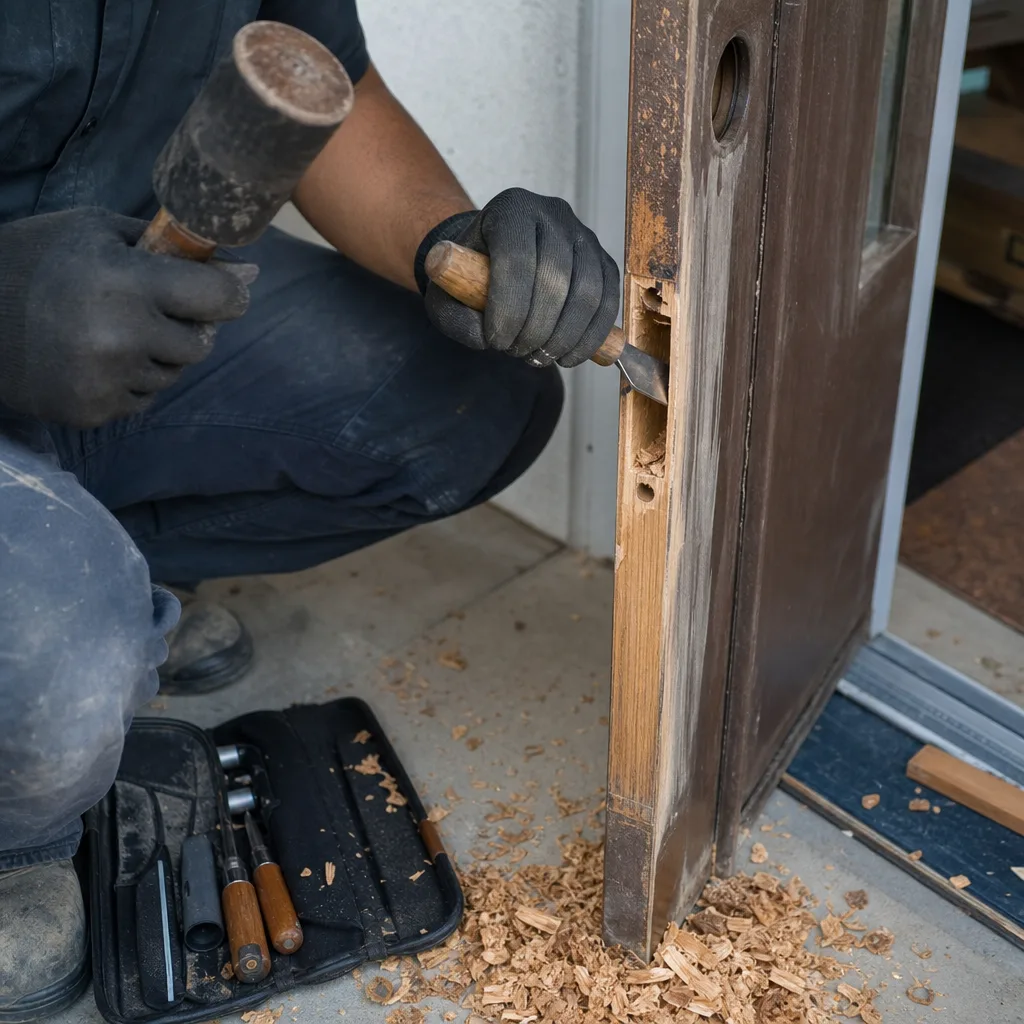
Call our Commercial Locksmith services when you encounter binding locks, keys that stick or require jiggling, doors that won’t latch without slamming, exit devices with delayed touchpad return, or any hardware change after a break-in attempt. These symptoms indicate wear beyond adjustment range or security compromise requiring professional assessment.
Call immediately if a fire door won’t close and latch automatically, if an exit device requires more than 15 pounds of pressure to operate, or if any key is lost or unaccounted for in a master key system. These are life-safety and security emergencies, not maintenance deferrals.
Novak Lock & Security Long Beach offers free estimates for commercial maintenance program setup and free second opinions on any competitor’s written estimate. We serve commercial properties throughout Long Beach, from the Downtown core to the Port of Long Beach industrial corridor, with background-checked, uniformed technicians and documented photo records on every visit. Call (424) 340-6795 to schedule an inspection or review your current maintenance agreement.
Frequently Asked Questions
Commercial lock maintenance in Long Beach typically runs $75-$150 per visit for a standard retail or office property with 4-8 doors, with flat per-lock pricing for inspection and per-cylinder pricing for rekeying. A full maintenance agreement with quarterly inspection averages $300-$600 annually for small to mid-size properties. We quote all pricing in writing before any work begins, with no call-out surcharge added on arrival - Haven Standard Clause 1.
High-traffic commercial entrances should be inspected quarterly, secondary doors semi-annually, and master key systems audited annually. Properties within two miles of the Long Beach coastline should add 50% to these frequencies due to salt-air corrosion acceleration. We structure these intervals in our maintenance agreements with flat pricing, not estimates.
Yes. The price our dispatcher quotes is the price on the invoice, and our technicians are contractually prohibited from changing it at the door. This rule has been in place since 2002 and is the foundation Novak Lock & Security was built on. If additional work is discovered during inspection, we quote it separately in writing before proceeding - you approve every dollar.
Every Novak Lock & Security technician is background-checked, uniformed, and trained to The Haven Standard. Every visit includes a documented photo record left with the customer. For commercial exit device and access control work, technicians carry specific manufacturer certifications for the brands we install and service. We do not send residential-only technicians to commercial jobs.
Schedule a master key system audit immediately. We will inventory all documented keys, inspect locks for pick or bump marks, and assess whether rekeying is more cost-effective than continued exposure. For standard Schlage or Kwikset systems, unauthorized duplication is always possible; for high-security Medeco or Mul-T-Lock systems, unauthorized factory duplication is mechanically prevented. Call (424) 340-6795 for a free estimate on audit and rekey scope.
ADA compliance measurement for door hardware - lever height, operating force, strike alignment, clear opening width - is included in our commercial maintenance agreements at no additional charge. We provide written documentation with measurements and photos. For full facility ADA surveys including parking, restrooms, and path of travel, we coordinate with certified access specialists and can include their scope in our project management.
The Bottom Line
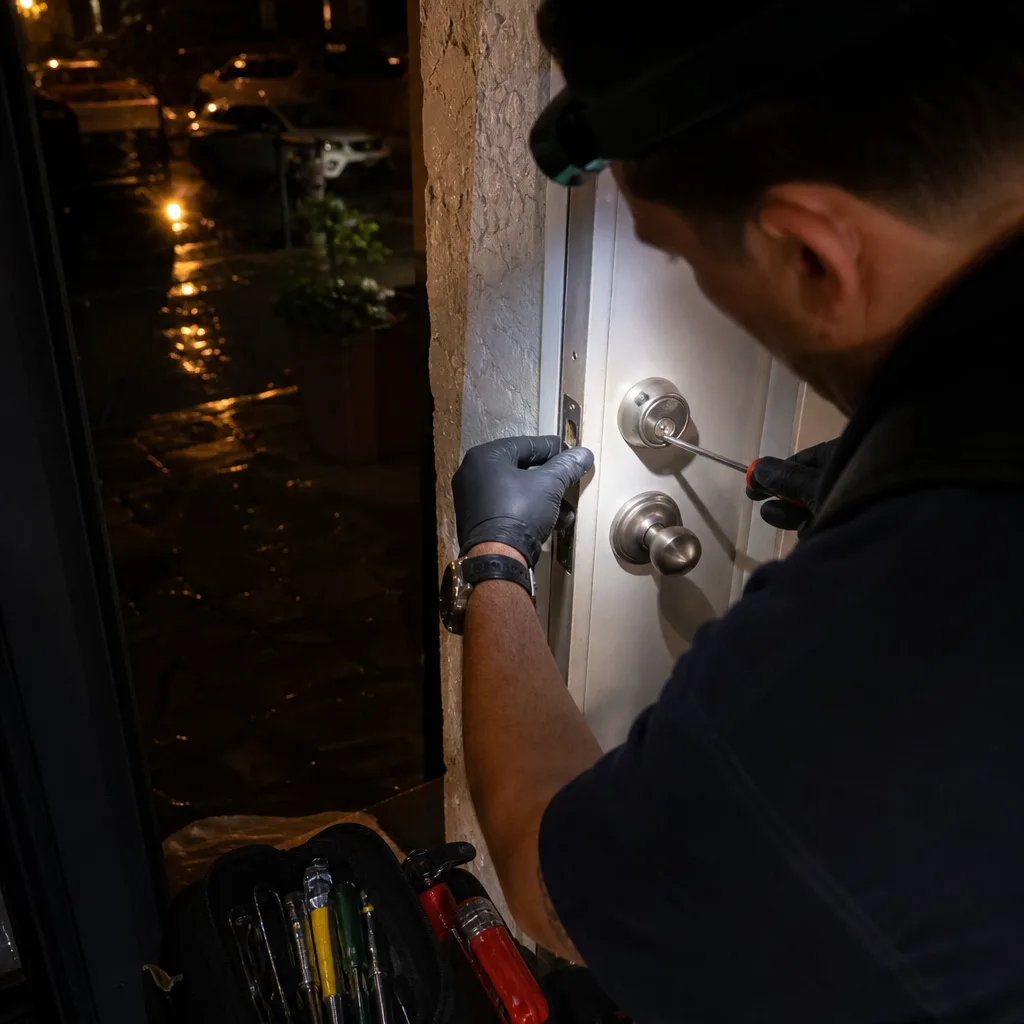
Commercial lock maintenance in Long Beach requires a discipline separate from residential care: cycle-count tracking for predictive replacement, ADA tolerance measurement after any hardware change, exit device inspection adapted to coastal humidity, master key audit for key control integrity, and a vendor agreement that puts scope, frequency, and documentation in writing. The properties that treat these as distinct, scheduled responsibilities avoid the code violations, security gaps, and emergency costs that reactive maintenance guarantees. For additional maintenance strategies, see more guides & resources. The ones that don’t learn the difference when a fire marshal, an insurance adjuster, or a break-in forces the lesson.
Written by Daniel Novak, Owner at Novak Lock & Security Long Beach, serving Long Beach since 2002.