
Last updated September 25, 2026
Non-destructive entry first, always - and we re-key Schlage, Kwikset, and Baldwin locks on the spot while you watch
You get a price before we start. It does not change when we arrive. No surprises.
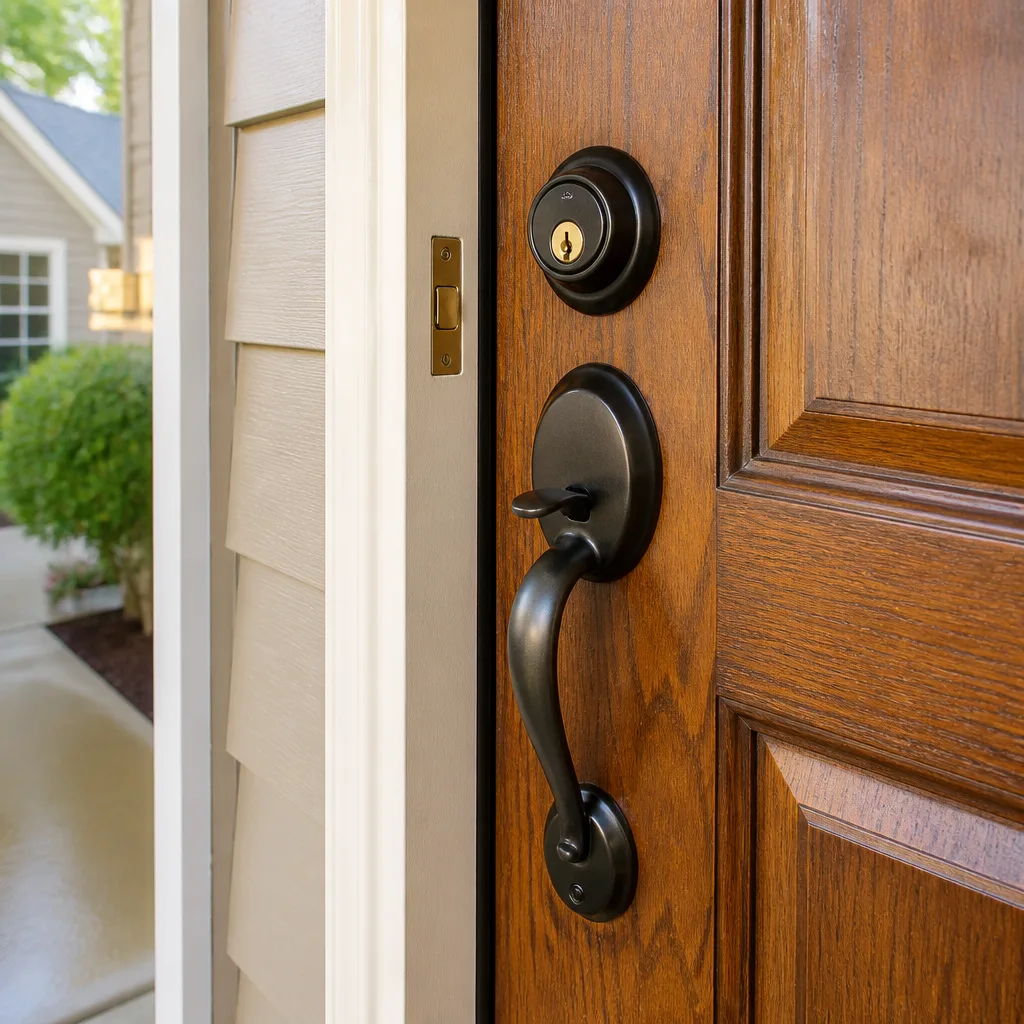
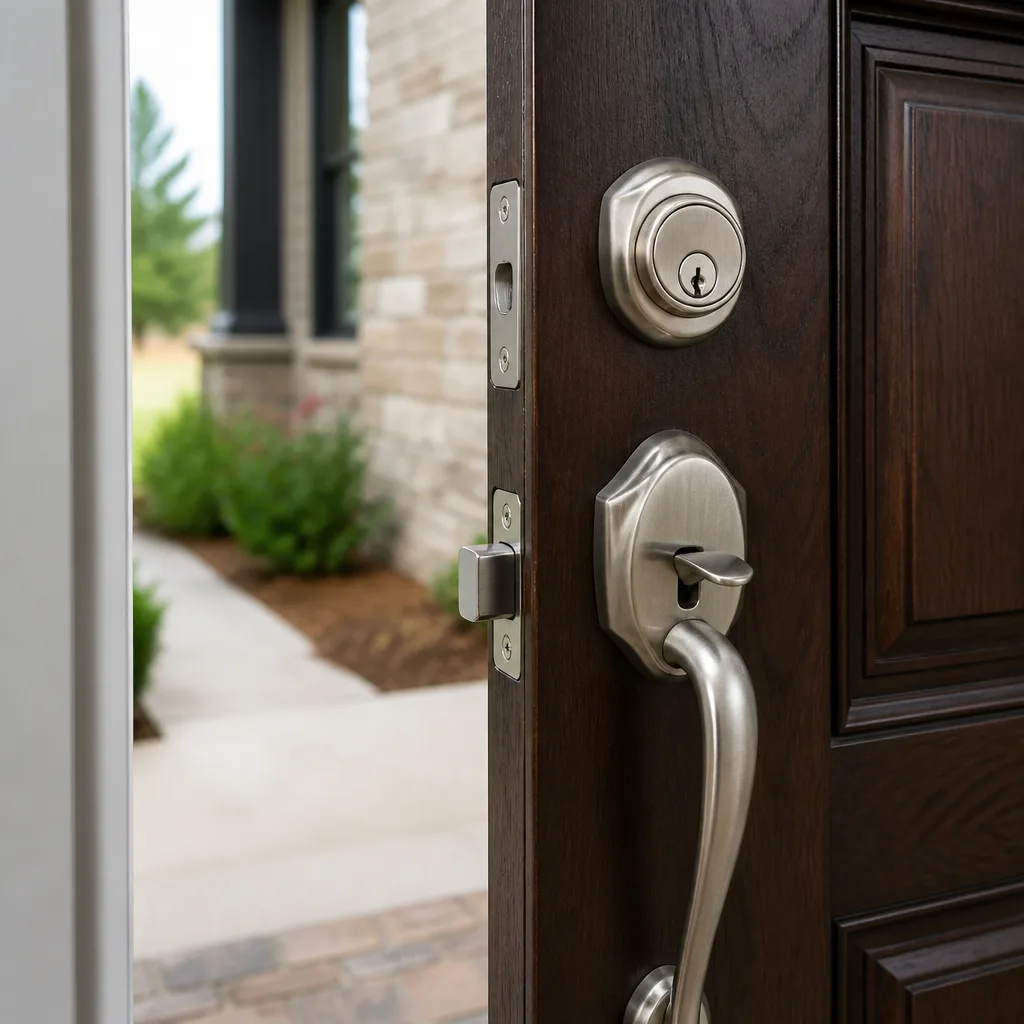
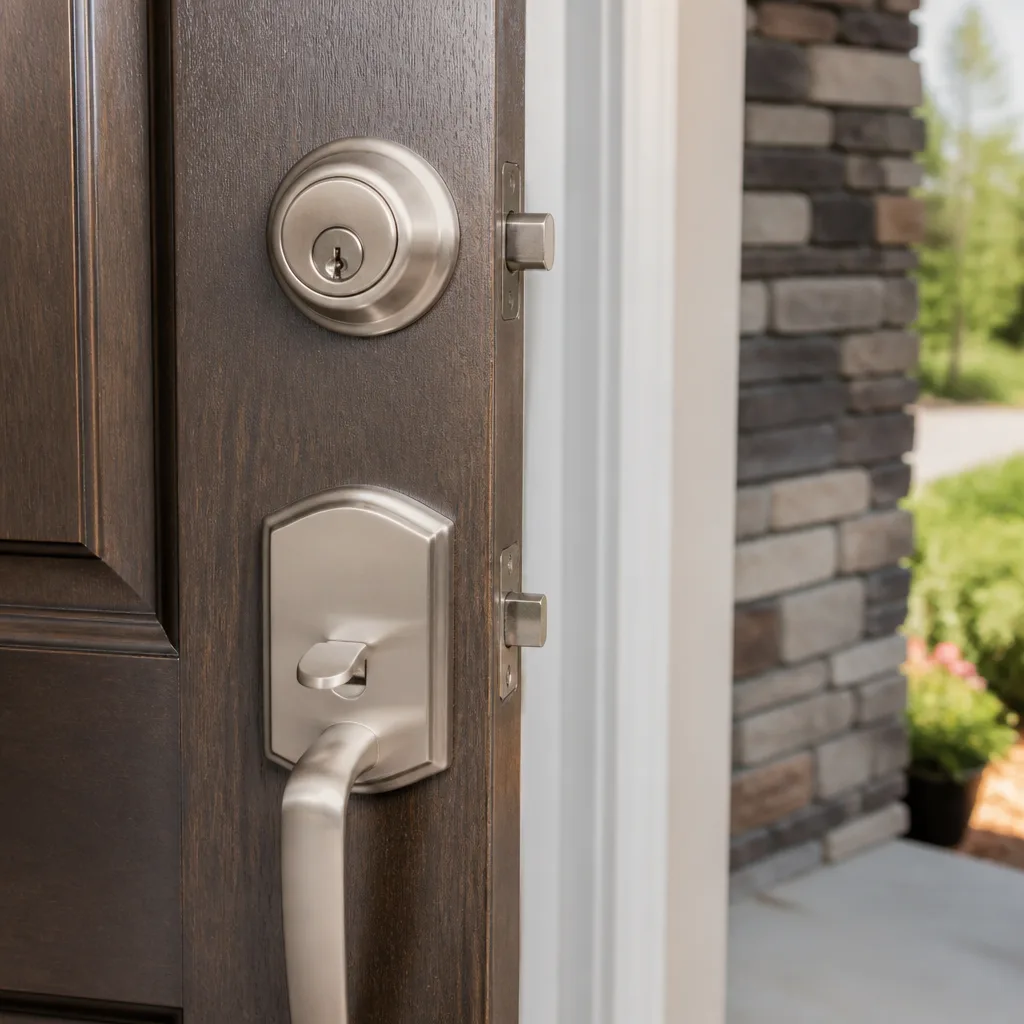
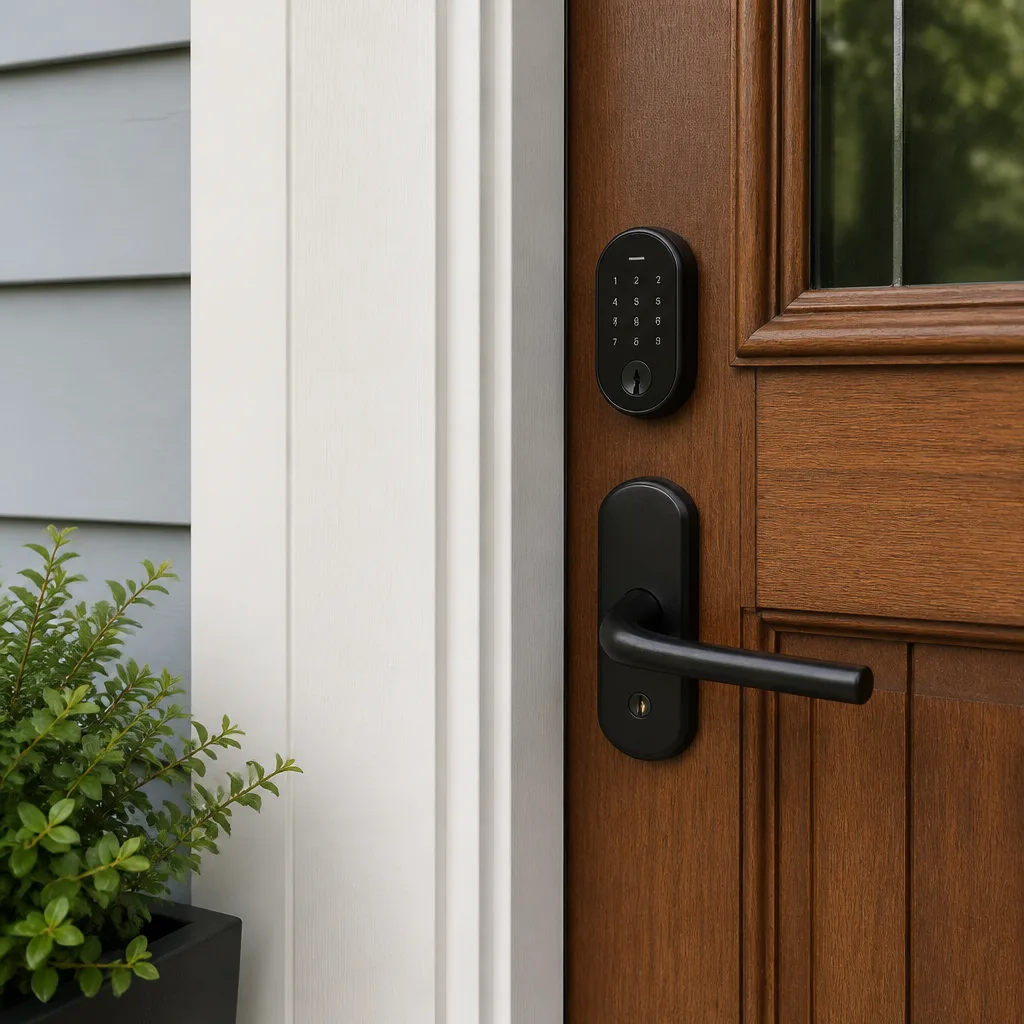
DIY vs Professional Locksmith: The Long Beach Homeowner’s Decision Guide
Most Long Beach homeowners who install their own deadbolts believe they’ve saved money. In our experience, roughly one in three of those installations has a strike plate misalignment, an incorrect backset, or a Grade 2 lock placed where a Grade 1 was needed. The lock turns. The key works. The door looks secure. But the gap between “functional” and “protective” is where break-ins happen, and it’s invisible until it fails. This guide draws the line task by task: what you can legitimately do yourself, what only looks doable, and what risks you’re actually trading against the cost of a professional.
Quick Answer
For most Long Beach homeowners, single-cylinder deadbolt replacement on a properly prepped door and battery swaps on electronic locks are genuinely DIY-appropriate. Rekeying, strike plate reinforcement, smart lock wiring, and any lock installation where the door requires modification should be handled by a trained locksmith. The break-even point usually arrives when you factor in tool costs, the value of a documented installation record for insurance or warranty claims, and the risk of voiding manufacturer coverage through improper installation. For a detailed look at what professional service actually costs, see our Locksmith Cost Breakdown: The Long Beach Homeowner’s Reference for 2026.
Table of Contents
- What Homeowners Can Reasonably Do Themselves
- Tasks That Look Simple But Aren’t
- The False Sense of Security Problem
- Warranty, Insurance, and the Documentation Gap
- The Break-Even Math: When DIY Costs More
- Long Beach-Specific Factors: Climate, Codes, and Crime Patterns
- The Tool Investment Reality
- When to Call a Professional Locksmith in Long Beach
What Homeowners Can Reasonably Do Themselves
Some locksmith tasks are genuinely within reach of a competent homeowner with basic tools. The key is matching the task to the door’s existing condition. If the door is already properly prepped, meaning the bore holes, backset, and strike mortise are correct and aligned, replacement becomes straightforward.
Single-Cylinder Deadbolt Replacement on a Prepped Door
This is the most common DIY-appropriate task. If you’re swapping a failed or outdated deadbolt for a new one of the same brand and model family, and the door hasn’t warped or shifted, the installation requires only a Phillips screwdriver and fifteen minutes. The critical checkpoints are:
- Verify the backset (the distance from the door edge to the center of the bore hole) matches the new lock, typically 2-3/8″ or 2-3/4″ in Long Beach homes built after 1980.
- Confirm the strike plate aligns with the bolt without binding; the bolt should extend fully with light thumb pressure.
- Check that the door frame hasn’t compressed or shifted, common in older Belmont Shore and Alamitos Beach properties where settling is routine.
We see homeowners succeed here when they stay within the same product family. A Schlage B60N replacing a Schlage B60N, for instance, uses identical mounting holes and strike geometry. Problems start when homeowners mix manufacturers or move from a standard deadbolt to a smart lock without verifying prep compatibility.
Knob and Lever Swaps on Matching Preps
Passage, privacy, and keyed entry knobs or levers follow the same rule. Same prep, same backset, no door modification. The tools are minimal, and the failure modes are usually obvious, a loose collar or a backwards installation that you catch immediately. Where homeowners err is forcing a lever onto a door prepped for a knob with a different rosette diameter, leaving gaps that expose the latch mechanism.
Battery Replacement on Electronic Locks
This is straightforward but worth mentioning because we’ve been called to Long Beach homes where a “dead” Schlage Encode or Yale Assure was simply running on depleted alkalines. Most electronic locks provide low-battery warnings for two to four weeks before failure. Use lithium AAs where the manufacturer permits them; they withstand the temperature swings in Long Beach’s marine-adjacent climate better than alkaline cells, which leak more readily in humid conditions near the waterfront.
What We Tell Customers Who Ask
When a homeowner calls Novak Lock & Security Long Beach and describes one of these tasks, we explain the checkpoints and offer to walk them through it at no charge. For guidance on selecting the right professional, read our How to Hire a Locksmith Contractor in Long Beach: A Step-by-Step Guide. If they proceed and hit a snag, we’re available. That call costs nothing. A botched installation that damages the door or voids a warranty costs significantly more.
Tasks That Look Simple But Aren’t
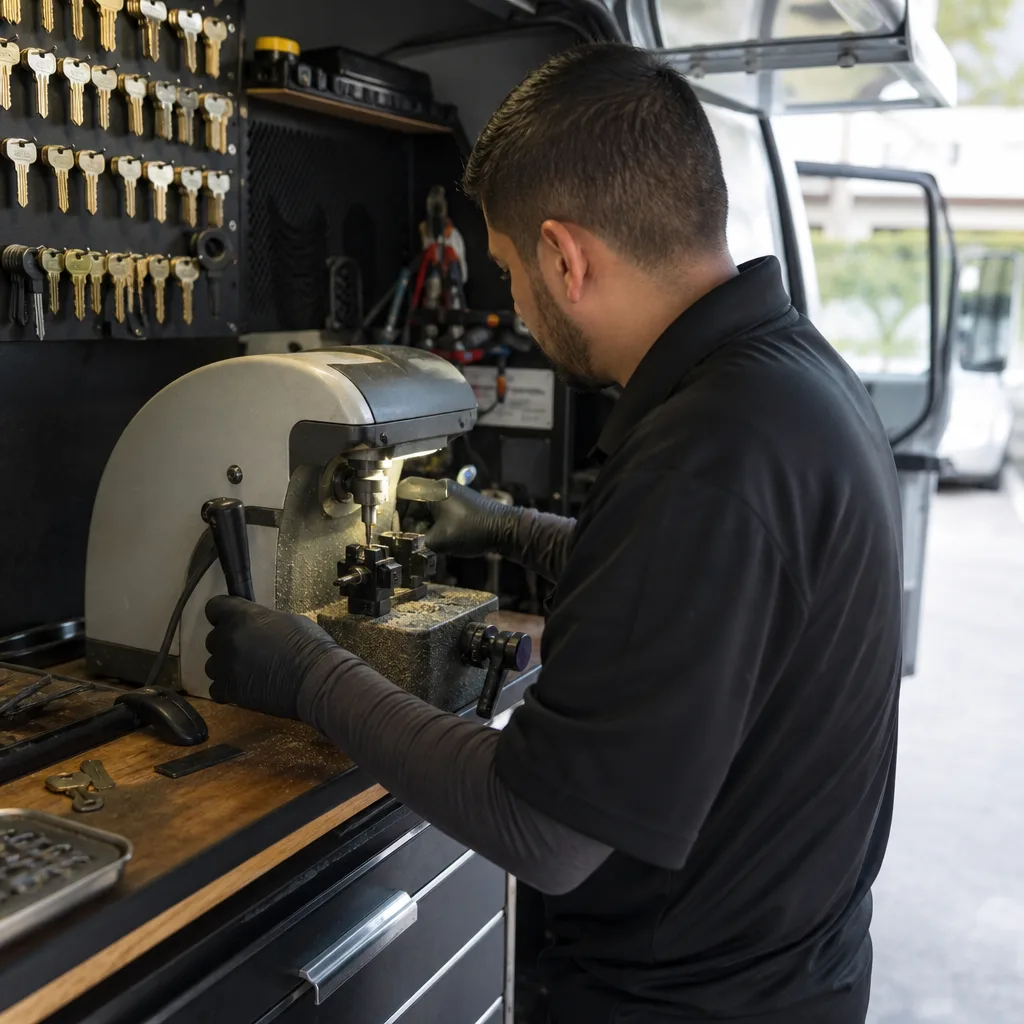
The locksmith trade has a category of tasks that appear mechanical and forgiving but carry hidden failure modes. These are where we see the most DIY callbacks in Long Beach, particularly in the Bixby Knolls and California Heights neighborhoods where homeowners are active renovators.
Rekeying
Rekeying a pin-tumbler cylinder looks like a simple matter of removing the cylinder, dumping the pins, and inserting new ones to match a different key. The reality is more specific. You need:
- A rekey kit with the correct pin sizes for your lock’s brand and keyway
- A follower tool that matches the cylinder diameter exactly, a standard .495″ follower will not work in a Schlage Everest cylinder
- Knowledge of the specific keyway profile (SC1, KW1, Everest, Primus) to order the correct pins
- The ability to maintain spring pressure while sliding the cylinder plug out without dropping top pins into the lock body
We’ve opened Long Beach homes where a DIY rekey attempt left the cylinder inoperative because a top pin fell into the lock body and jammed the mechanism. The homeowner then paid for an emergency call plus a replacement cylinder, which erased any savings from the attempted rekey. Professional rekeying in Long Beach typically runs $19-$35 per cylinder when performed as part of a multi-lock service, quoted in writing before we start under Haven Standard Clause 1.
Strike Plate Reinforcement
This is the most dangerous DIY task because it looks like carpentry, not locksmithing. A strike plate is only as strong as what anchors it. Most Long Beach homes built between 1945 and 1985 have soft pine door frames with minimal structural backing behind the jamb. Driving a 3″ security screw into that frame without verifying stud location can split the jamb, strip the screw hole, or miss the framing entirely, leaving the plate secured only by the decorative screws that came with the lock.
Proper strike reinforcement requires locating the king stud or jack stud behind the jamb, drilling a pilot hole that doesn’t wander in soft wood, and using screws with the correct thread pitch for the application. We’ve replaced entire door frames in Long Beach’s Bluff Park and Belmont Heights areas where homeowners split the jamb with overlong screws, then faced a $400-$600 carpentry repair on top of the original locksmith call.
Smart Lock Wiring and Integration
Battery-powered smart locks are largely DIY-appropriate. Hardwired smart locks, integrated access control systems, and any lock requiring low-voltage wiring through the door are not. Drilling through a steel or fiberglass door for wire passage without damaging the internal insulation, maintaining fire rating compliance, and properly terminating connections requires tools and training most homeowners don’t have. Access Control Systems in Long Beach covers the full scope of integrated installations.
Lock Installation Requiring Door Modification
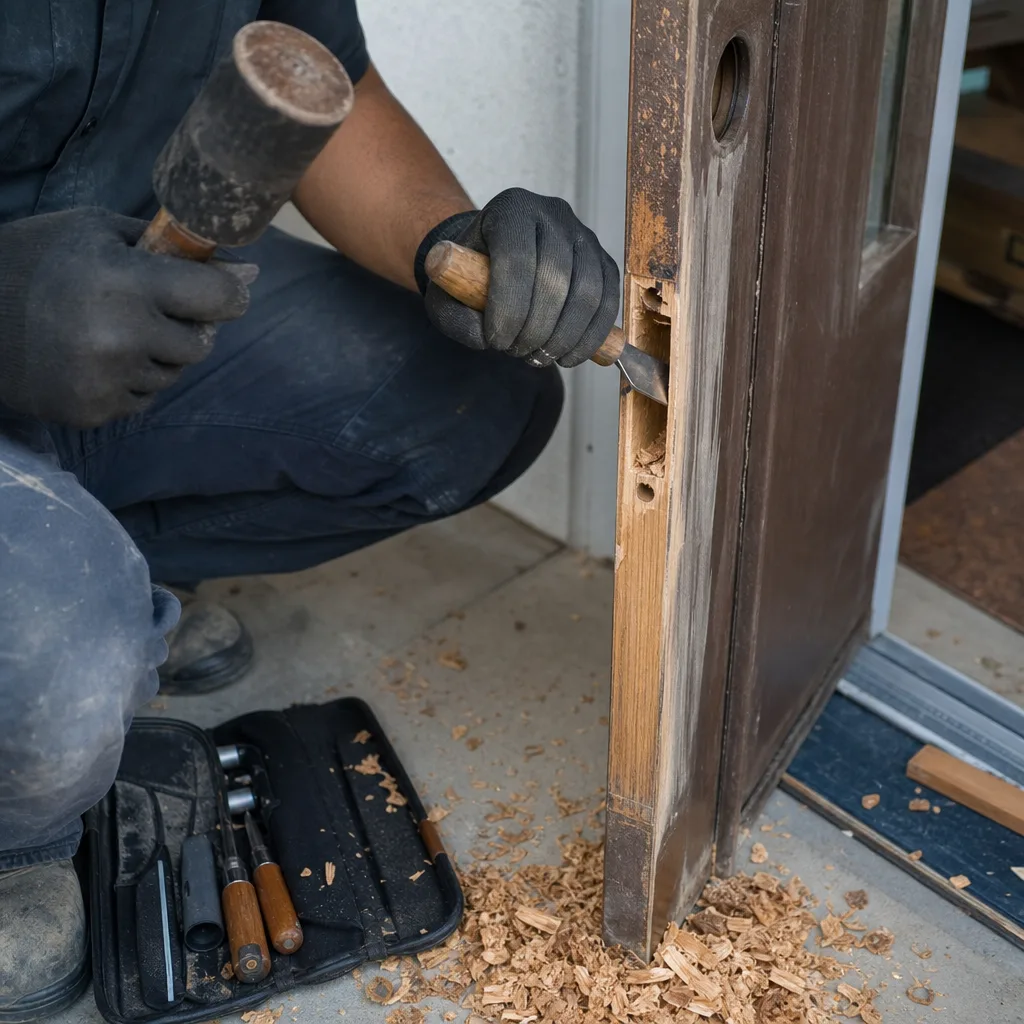
Any task that requires boring new holes, mortising for a deadbolt where none existed, or altering the door edge prep crosses into professional territory. The tolerances are tight. A deadbolt bore that wanders 1/8″ off center will bind the bolt. A mortise depth that’s shallow by 1/16″ will leave the strike plate proud of the jamb, creating a visible gap and a leverage point for forced entry.
The False Sense of Security Problem
This is the core risk that most DIY guides ignore. A lock can be installed incorrectly and still function day-to-day. The homeowner tests it, the key turns, the bolt extends, and the door feels secure. The failure mode is latent. It only reveals under stress.
Consider a misaligned strike plate. The bolt extends into the plate, but only the beveled edge catches. A kick or pry attack drives the bolt back along that bevel with minimal resistance. The lock was “working” for six months. Then it failed in under two seconds. The homeowner had no warning because there is no routine test that simulates forced entry.
We document this condition in Long Beach homes regularly. In our written records, we describe what we found: “Strike plate misaligned 3/16″ high, bolt engaging only beveled edge, no security value under forced entry.” Then we describe what was done: “Repositioned strike to center on bolt path, installed 3″ structural screws into jack stud, tested with 150 lb. lateral load.” That documentation becomes part of the home’s maintenance record.
A DIY installation produces no such record. There is no timestamp, no hardware specification, no condition assessment, no test methodology. If the lock fails and an insurance claim follows, the adjuster has nothing to review. If a tenant or buyer questions the security of the premises, there is no documentation to produce.
The false sense of security is not a theoretical concern. In Long Beach’s rental-heavy markets, particularly around Downtown and the East Village, landlords who self-install locks face liability questions if a break-in occurs. A documented professional installation with a photo record and written scope is defensible. A DIY installation with no paperwork is not.
Warranty, Insurance, and the Documentation Gap
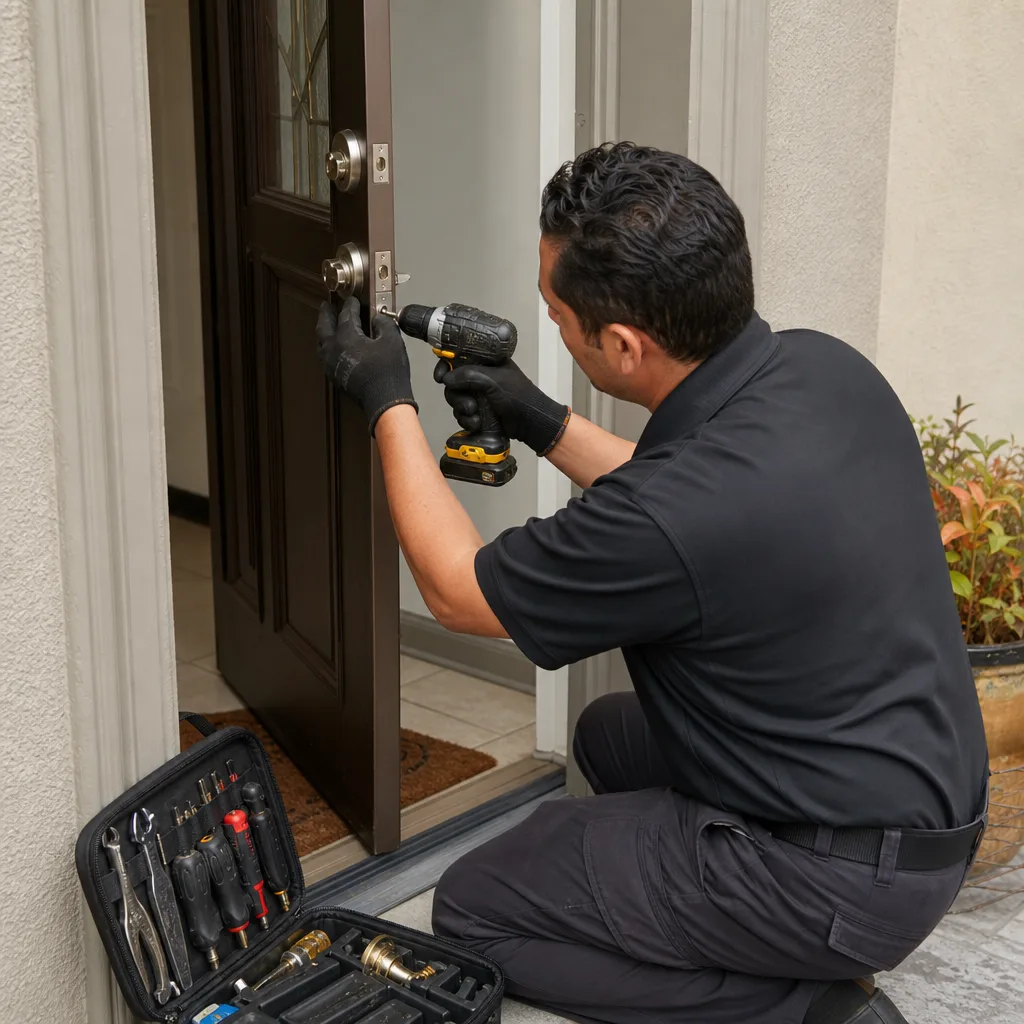
Most homeowners don’t read the installation requirements in their lock warranty. They should. Grade 1 deadbolts from major manufacturers, including Baldwin, Sargent, and Schlage, carry specific installation clauses that define “proper installation” by measurable criteria:
- Backset tolerance within 1/16″ of specification
- Strike plate alignment allowing full bolt extension without binding
- Screw specification and depth matching the installation template
- Door thickness within the stated range, typically 1-3/8″ to 1-3/4″
- No modification to the lock mechanism or cylinder
“Improper installation” is not defined as “the lock didn’t work.” It’s defined as deviation from these specifications. A homeowner who installs a Mul-T-Lock deadbolt with a misaligned strike has voided the warranty even if the lock operated smoothly for years. When the mechanism fails prematurely due to lateral stress on the bolt, the manufacturer denies the claim.
Professional installation creates a paper record that satisfies warranty requirements. At Novak Lock & Security Long Beach, every installation includes:
- A written scope stating the hardware model, finish, and keyway
- A documented photo record of the installed lock, strike alignment, and door condition
- A written price quoted before work began, per Haven Standard Clause 1
- A 365-Day Done Right Promise covering installation defects
This record is left with the customer and retained in our files. If a warranty claim arises, the homeowner has evidence of proper installation. If an insurance claim follows a break-in, the documentation supports the security measures that were in place.
For landlords in Long Beach, this documentation serves a second purpose. The city’s rental inspection program, active in certain zones, can require evidence of maintained security hardware. Understanding the regulatory landscape is important; see our overview of Locksmith Permits, Codes & Inspections in CA: What You Need to Know. A dated photo record with hardware specifications satisfies that requirement. A DIY installation with no paperwork does not.
The Break-Even Math: When DIY Costs More
The financial case for DIY locksmithing rests on avoiding labor charges. The full calculation rarely includes the hidden costs. Here’s how the math actually works for a typical deadbolt installation in Long Beach.
DIY Cost Components
| Item | Typical Cost |
|---|---|
| Grade 1 deadbolt (Baldwin, Sargent, or equivalent) | $85-$180 |
| Installation tools (hole saw set, chisel, drill bits) if not owned | $45-$120 |
| Strike reinforcement kit with structural screws | $15-$30 |
| Time value: 2-4 hours for first-time installation | Variable |
| Potential callback: misalignment, binding, or frame damage | $150-$400+ |
| Warranty void if installation deviates from spec | Full replacement cost |
Professional Cost Components
| Item | Typical Cost |
|---|---|
| Grade 1 deadbolt with installation labor | $180-$340 |
| Written price quoted before dispatch | No surprise charges |
| Documented photo record and written scope | Included |
| 365-Day Done Right Promise | Included |
| Warranty preserved through certified installation | Full manufacturer coverage |
The break-even point shifts based on what you already own. If you have a complete door hardware toolkit and have installed deadbolts successfully before, DIY may pencil out for a straightforward replacement. If you’re buying tools for a one-time job, or if the door requires any modification, professional installation often costs less when you account for time, risk, and documentation value.
We’ve performed this calculation with Long Beach homeowners over the phone. Some proceed with DIY and call us only if they hit a problem. Others book the installation after seeing the full cost picture. Both outcomes are acceptable. What we avoid is the homeowner who discovers the true cost after the door is damaged.
Long Beach-Specific Factors: Climate, Codes, and Crime Patterns
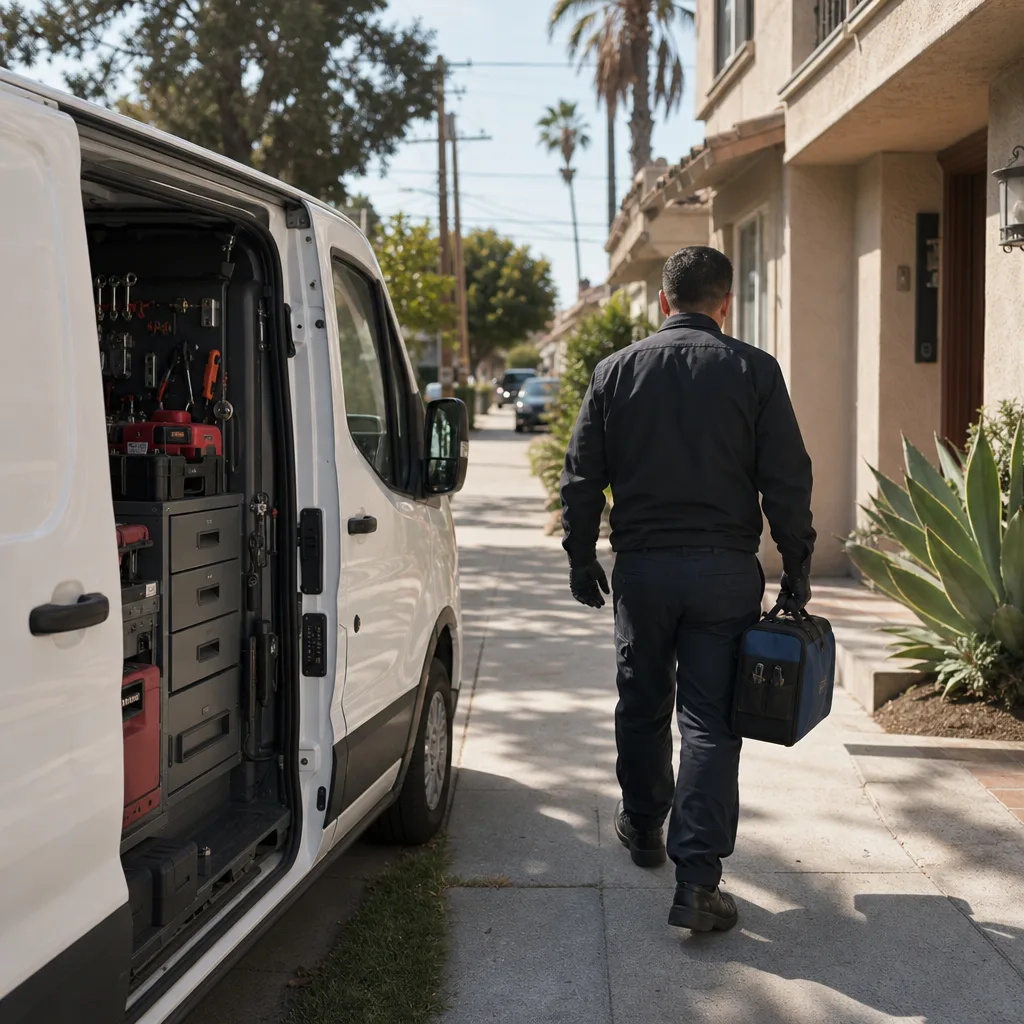
Locksmith recommendations vary by geography. What’s appropriate in Phoenix or Minneapolis may not apply in Long Beach. Several local factors affect the DIY versus professional decision here.
Marine Climate and Hardware Degradation
Long Beach’s coastal proximity creates higher ambient humidity than inland markets. Salt air accelerates corrosion in standard steel components. We’ve replaced prematurely failed locks in the Peninsula and Naples neighborhoods where homeowners installed entry-grade hardware without considering finish durability. A professional installation includes hardware selection matched to exposure: stainless steel or PVD finishes for marine-adjacent properties, brass or bronze for sheltered inland locations.
Seismic Considerations and Door Alignment
California’s seismic activity causes cumulative settling and frame shifting. A deadbolt that aligned perfectly in 2018 may bind by 2024. DIY installation on a door that’s already showing frame stress, common in pre-1970s Long Beach construction, often fails within months. We assess frame condition as part of every installation and address alignment before mounting hardware.
Local Crime Patterns and Security Grading
Long Beach Police Department data shows persistent property crime concentrations in certain zones. The security grade of hardware matters more in high-incident areas. A Grade 2 lock installed DIY in a low-risk neighborhood may be adequate. The same lock in a higher-risk zone is a known vulnerability. Residential Locksmith in Long Beach covers security grading by neighborhood context.
Rental Inspection and Code Compliance
Long Beach’s rental housing inspection program, administered through the Development Services Bureau, can require functional security hardware at each exterior door. Self-installed locks that fail inspection due to improper mounting or non-compliant hardware create re-inspection fees and tenant complaints. Professional installation with documentation streamlines compliance.
The Tool Investment Reality
The internet is full of “tools every homeowner needs” lists that include door hardware kits. Most homeowners use those tools once, store them for five years, and discard them during a move. The true cost of a DIY installation includes this depreciation.
For a one-time deadbolt installation, the required tools are:
- A hole saw set in 2-1/8″ and 1″ diameters, $25-$45
- A spade bit or Forstner bit for the strike mortise, $8-$15
- A sharp chisel for cleaning mortise edges, $12-$20
- A drill with sufficient torque for steel door applications, often already owned
- A tape measure, square, and marking tools, typically already owned
If you already own these tools and know how to use them, the incremental cost is zero. If you’re purchasing for a single job, add $45-$80 to your DIY calculation. If you’re installing on a steel door, you may also need cutting oil, a step drill for pilot holes, and a deburring tool, another $20-$35.
The tool investment makes sense for homeowners who plan multiple hardware projects: replacing all locks after a move, upgrading to smart locks throughout, or maintaining a rental portfolio. For a single deadbolt on a single door, it’s often poor economics. We’ve had Long Beach customers tell us they spent $90 on tools, four hours on installation, and still called us to correct a binding bolt. Their total cost exceeded professional installation from the start.
When to Call a Professional Locksmith in Long Beach
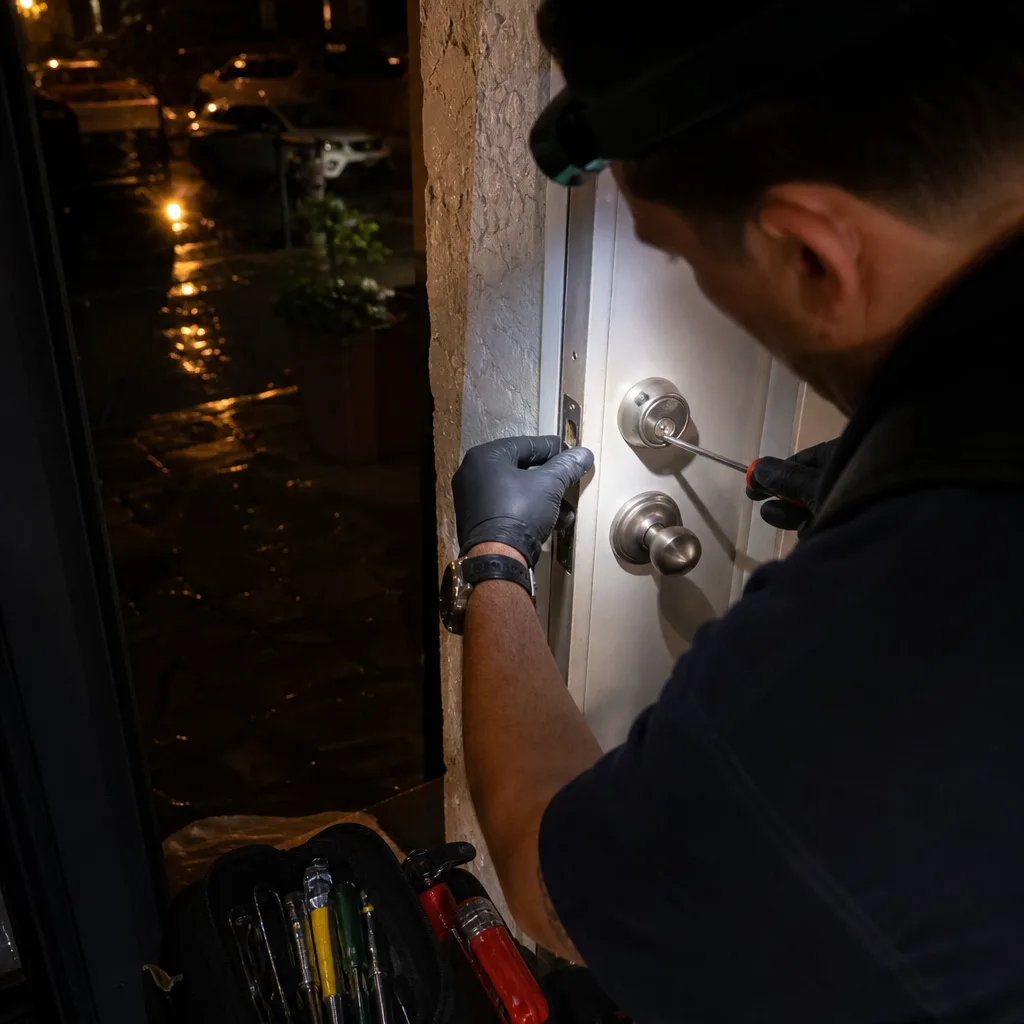
Call a locksmith before you start if any of the following apply:
- The door is steel, fiberglass, or solid-core and requires boring or mortising
- The existing lock is a high-security cylinder (Medeco, Mul-T-Lock, Abloy) with restricted keyways
- The frame shows signs of splitting, compression, or prior forced entry
- You need rekeying to match a master key system or existing key schedule
- The installation is for a rental property subject to inspection
- You need a documented record for insurance, warranty, or legal purposes
- You’ve already attempted the work and encountered binding, misalignment, or mechanism failure
Novak Lock & Security Long Beach offers free estimates in Long Beach. Call (424) 340-6795, and a live person will answer. We’ll ask about the door type, existing hardware, and what you’re trying to achieve. If it’s genuinely DIY-appropriate, we’ll say so. If it requires professional installation, we’ll quote a firm price that is contractually prohibited from changing at the door. You can also explore more guides & resources on our blog to help determine the right approach for your situation. Haven Standard Clause 1: the price on the phone is the price on the invoice.
Common Mistakes to Avoid
- Installing a deadbolt on a door with glass within arm’s reach of the lock. The deadbolt is bypassed by breaking the glass and reaching through. A professional assesses the full door assembly and may recommend a double-cylinder lock or auxiliary security instead.
- Using the screws that came with the lock for strike plate mounting. Most included screws are 3/4″ to 1″ and anchor only in the door jamb, not the structural framing. Proper strike reinforcement requires 3″ screws into the jack or king stud.
- Ignoring backset when ordering locks online. Long Beach homes built before 1960 often have 2-3/8″ backsets; post-1980 construction is mixed. Measure before ordering, or you’ll bore a second hole and weaken the door.
- Rekeying without verifying keyway compatibility. Schlage SC1 and SC4 keyways use different pin sizes. A rekey kit for one will not work in the other. We’ve replaced cylinders destroyed by incorrect pin insertion.
- Assuming smart locks are universally compatible. Many require specific door thickness, bore diameter, and edge bore location. A homeowner in Bixby Knolls recently drilled a $400 Yale Assure into a 1-1/2″ thick vintage door, voiding the warranty and destroying the lock.
- Neglecting to test full bolt extension with the door closed. Testing with the door open only verifies mechanism function. The critical test is under actual strike plate contact, where misalignment reveals itself.
- Failing to document what was installed. No photos, no hardware model recorded, no key quantity noted. When a warranty claim or insurance dispute arises, there is no evidence to present.
Frequently Asked Questions
Standard deadbolt installation in Long Beach typically runs $180-$340 including labor and a Grade 1 lock, with rekeying at $19-$35 per cylinder when bundled. Novak Lock & Security Long Beach quotes every price in writing before dispatch, and Haven Standard Clause 1 prohibits any change at the door. Call (424) 340-6795 for an exact quote - estimates are free.
Yes. The price quoted on the phone is the price on the invoice, with no exceptions. This rule has been in place since 2002 and is the foundation of our business. If the scope changes based on conditions we couldn’t assess over the phone, we stop work, explain the finding, and quote the additional work before proceeding. You are never obligated to proceed beyond the original quote.
You can, if you own the correct rekey kit for your specific lock brand and keyway, a follower tool of the exact cylinder diameter, and have successfully rekeyed pin-tumbler cylinders before. Most homeowners lack one or more of these requirements. Professional rekeying ensures proper pin heights, spring function, and key operation, with a written record of the key schedule. In Long Beach, we rekey entire homes for new owners regularly - it’s faster and more reliable than DIY attempts.
It may. Most Grade 1 manufacturers define “proper installation” by specific tolerances for backset, strike alignment, screw specification, and door thickness. Deviation voids coverage even if the lock functioned initially. Professional installation with documented compliance preserves warranty rights. We leave every customer with a written scope and photo record that satisfies manufacturer requirements.
Probe the jamb with a finish nail or small drill bit to locate structural backing. If you hit hollow space or soft wood within 1″ of the strike location, the frame lacks adequate support for security screws. This is common in Long Beach homes with original 1940s-1960s pine frames. Professional installation includes frame assessment and reinforcement with strike boxes or structural backing as needed.
Call (424) 340-6795. Calls are answered by a live person 24/7, not an automated system or callback queue. For emergency lockouts in Long Beach, we typically dispatch within minutes of quote acceptance. For scheduled work, we book at your convenience and confirm with a written scope and price before arrival.
Battery-powered smart locks on properly prepped doors are often DIY-appropriate if you follow manufacturer instructions exactly. Hardwired smart locks, integrated access control, and any installation requiring door modification should be handled professionally. Access Control Systems in Long Beach covers the full range of integrated electronic security.
The Bottom Line
The DIY versus professional question is not about your skill level. It’s about risk categories: warranty preservation, security effectiveness under stress, and documentation that holds up to scrutiny. Single-cylinder deadbolt replacement on a sound, prepped door is genuinely within reach. Rekeying, strike reinforcement, smart lock wiring, and any door modification carry failure modes that are invisible until they matter. When you factor tool costs, time value, callback risk, and the documentation gap, professional installation often costs less than DIY for anything beyond basic replacement. In Long Beach’s specific climate, code environment, and housing stock, the calculation tilts further toward professional work on older properties and any installation requiring structural engagement.
For a free estimate on any lock installation, rekey, or security assessment, call Novak Lock & Security Long Beach at (424) 340-6795. We’ll quote a firm price that won’t change at the door, and we’ll tell you honestly if your project is DIY-appropriate.
Written by Daniel Novak, Owner at Novak Lock & Security Long Beach, serving Long Beach since 2002.